

Knee pain can make even simple movements feel uncertain. This article offers a clear, beginner-friendly look at how Reformer Pilates may help with common knee injuries and what your instructor can modify along the way.
Can Pilates Help with Knee Pain?
Pilates may help because it builds strength in the muscles that support the knee, including the quadriceps, hamstrings, and glutes, without heavy impact on the joint. Many members find that this kind of low-impact strength work feels more approachable than high-impact activities. Results vary from person to person, and Pilates is not a substitute for medical care or physical therapy.
Why Reformer Pilates Is a Low-Impact Option for Knee Pain
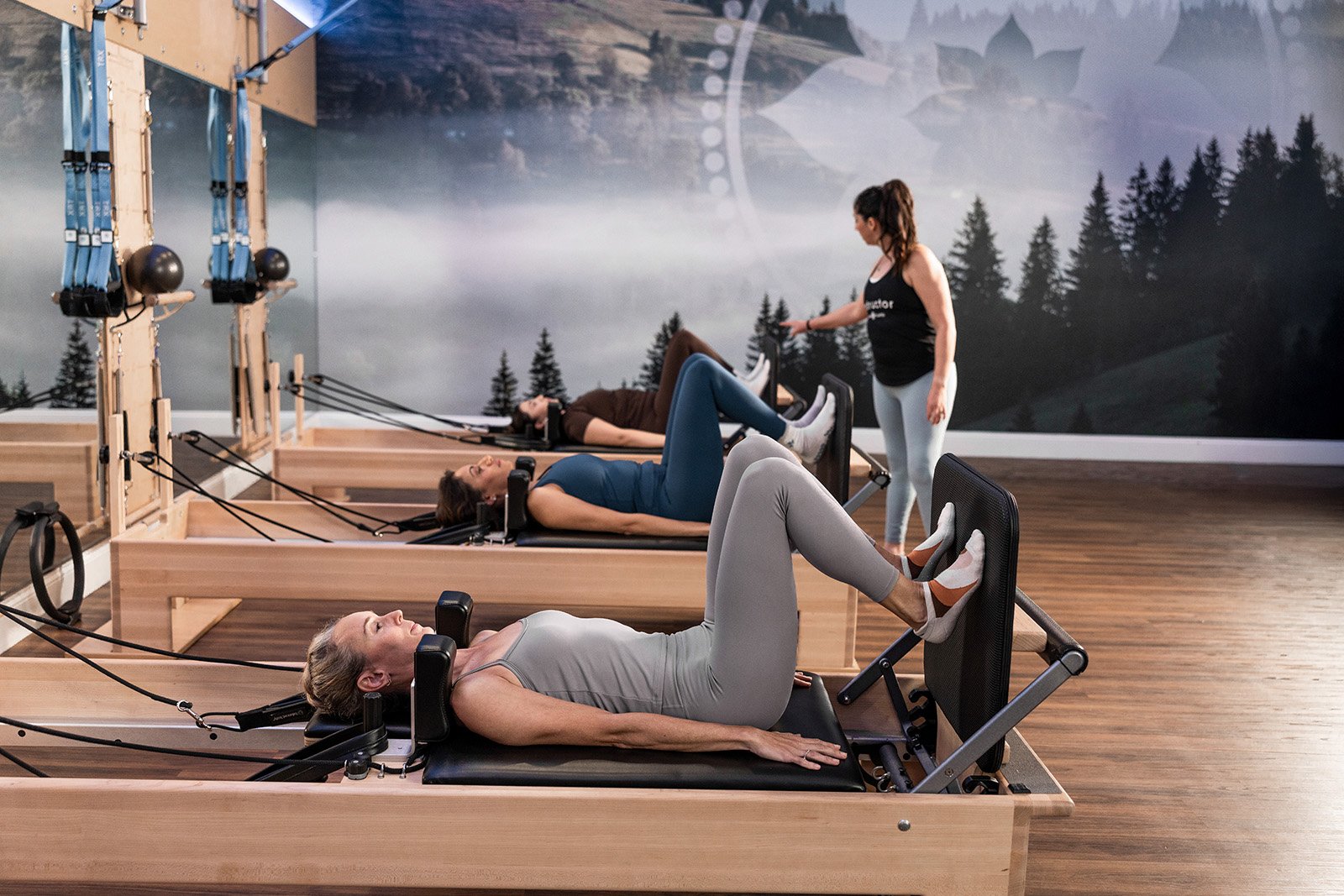
The Reformer uses spring resistance instead of gravity or jumping, so the body is supported throughout each movement. Range of motion stays controlled, which can feel more manageable for a sensitive knee. Your instructor can modify spring tension and adjust exercises to match your comfort level, so the workout can be challenging without feeling demanding on the joint.
Common Knee Injuries and How Reformer Pilates Can Help
Every knee injury is different, and every body responds differently to movement. The table below offers a general overview of how Reformer Pilates may help with some common knee injuries.
|
Injury |
What It Is |
How Reformer Pilates May Help |
What to Avoid or Modify |
|---|---|---|---|
|
Runner’s Knee |
Pain around or behind the kneecap, often from overuse. |
Low-impact strengthening of the hips and thighs may help support the kneecap. |
Avoid deep knee bends and ask your instructor how to limit range of motion if needed. |
|
Jumper’s Knee |
Irritation of the tendon below the kneecap, often from repetitive jumping. |
Controlled, spring-based resistance may help build strength without repetitive impact. |
Avoid plyometric or jumping movements and modify kneeling positions. |
|
Meniscus Tear |
A tear in the cartilage that cushions the knee joint. |
A meniscus tear may be managed with or without surgery as decided by a doctor, and low-impact strengthening around the knee may help manage associated knee pain. |
Avoid deep squats and modify positions that cause discomfort. |
|
ACL Tear (Post-Surgery, Cleared) |
A tear of the ligament that stabilizes the knee, often requiring surgical repair. |
For members cleared by their surgeon or physical therapist, gradual low-impact strengthening may help support stability, though timing varies for each person. |
Avoid pivoting movements and modify any exercise that feels unstable. |
|
Knee Arthritis |
Joint stiffness and pain, often from wear over time. |
Gentle, supported movement may help maintain mobility and surrounding muscle strength. |
Avoid high-impact movement and modify range of motion as needed. |
*Check with your doctor or physical therapist before starting, especially after surgery.
What to Tell Your Instructor
A quick conversation before class helps your instructor tailor the session to you. Consider sharing:
- Which knee is affected and where the pain is located.
- Any diagnosis or past surgery related to the knee.
- Which movements or positions feel uncomfortable.
- What tends to make the pain better or worse.
When to Check with Your Doctor First
Check with a doctor or physical therapist before starting Reformer Pilates if your knee pain is severe, new, or comes with swelling. The same goes for recent injuries that have not yet been evaluated. If you have had knee surgery, get clearance from your surgeon or physical therapist before starting any new exercise program, including Pilates.
Try a Free Intro Class
If you are curious whether Reformer Pilates may help with your knee pain, a Free Intro Class at Club Pilates is a low-pressure way to find out.
Frequently Asked Questions
Is Pilates good for knee pain?
Pilates may help by building strength in the muscles around the knee in a low-impact way. Many members find this supportive, though results vary and it is not a substitute for medical care.
Is Reformer Pilates safe with a knee injury?
It can be, especially when your instructor knows about your injury and adjusts exercises accordingly. Checking with your doctor or physical therapist first is recommended, particularly after surgery.
What should I tell my instructor about my knee injury?
Tell your instructor which knee is affected, what your diagnosis is, and whether you've had surgery, along with any movements that cause discomfort. Your instructor can then offer modifications and adjust the springs. It's best to check with your doctor or physical therapist first if you're unsure.
- Tagged:
- injury recovery