

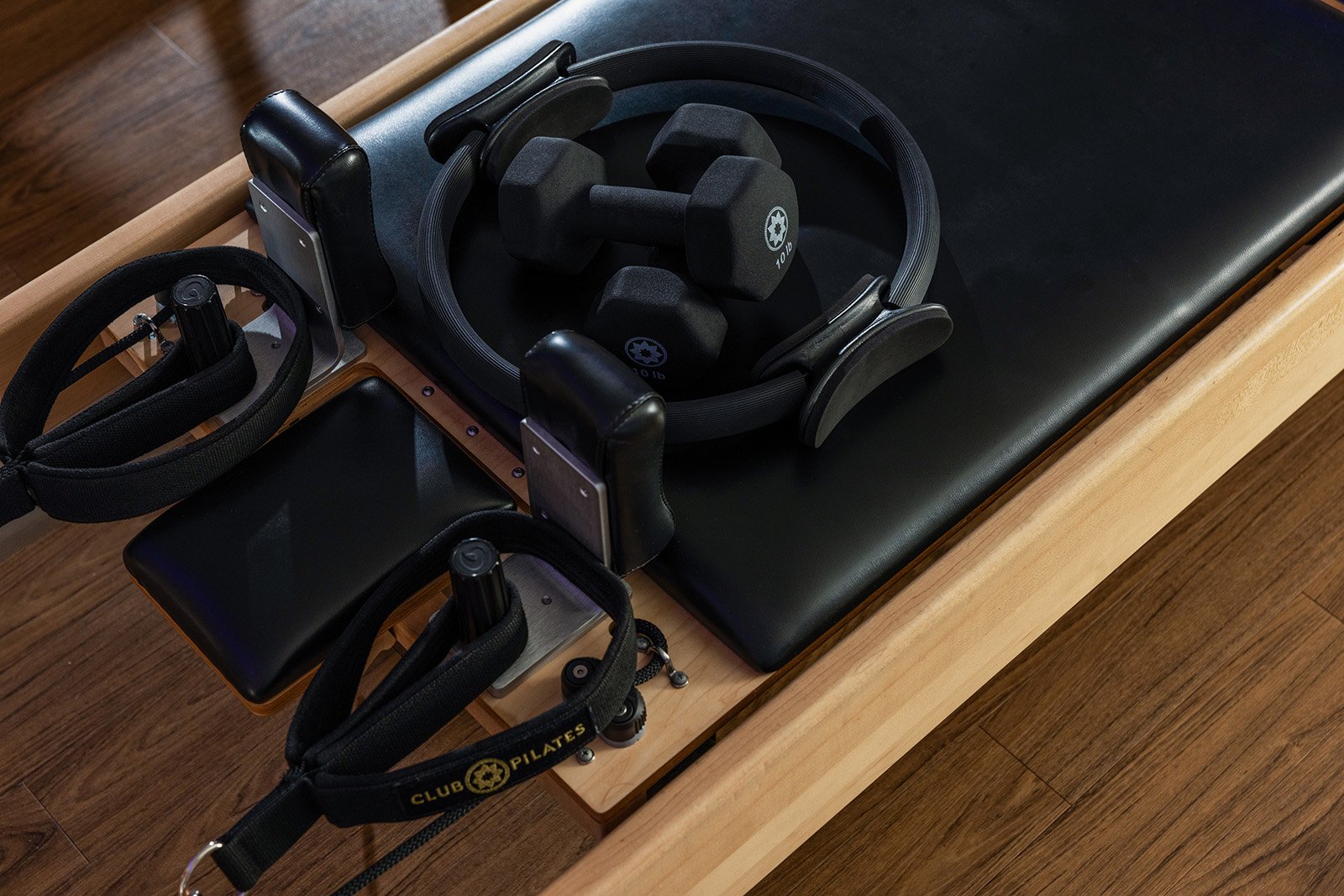
Yes, Pilates can help you build muscle. Pilates and weights both ask your muscles to work against resistance, and that effort can help build muscle strength and endurance. They go about it in different ways, however, and what muscle building looks and feels like is personal to each of us. Here is how the two compare, what the research says, and how to choose what fits your goals.
Pilates And Weights At A Glance
|
Reformer Pilates |
Weights and machines |
|
|
How resistance is applied |
Springs and your own body weight |
Free weights, machines, or body weight |
|
Typical rhythm |
Slow, controlled movements with lighter resistance, fewer reps, and typically just one set |
Varies by program, often heavier loads with fewer repetitions or lighter loads with higher repetitions and sets |
|
Core and stability muscles |
A central focus of every class |
Varies by exercise |
|
Joint impact |
Low impact, supported by the carriage and springs |
Varies with load and technique |
|
Range of motion |
Works muscles through a large range |
Varies by exercise |
What The Research Says
Researchers have studied how Pilates compares with other types of exercise. A systematic review published in 2022 pooled 11 randomized controlled trials and found that people who practiced Pilates built strength and muscular endurance in ways comparable to people doing other forms of exercise. The same held true for balance and flexibility.
In other words, Pilates holds its own. Whether you choose Pilates, weights or a mix of both, your muscles respond when you challenge them consistently.
The review's authors note that the evidence is still developing and call for more studies, which will help add detail on how different approaches compare.
A Boston University article describes what sets the approaches apart. Pilates tends to use body weight or lighter resistance with more repetitions to build stability and mobility, while weight lifting tends to use heavier loads with fewer repetitions. A Pilates manager quoted in the article describes Pilates as strengthening your stabilizer muscles through a larger range of motion.
How The Reformer Builds Muscle
At Club Pilates, most classes are built around the Reformer. The Reformer has a sliding carriage connected to springs, and the springs provide the resistance. You push and pull against that resistance while the equipment supports your body and protects your joints. That means you can train your muscles without the pounding that comes with other types of training.
Spring resistance also keeps your muscles working in both directions. You feel it as you press out, and again as you slowly return to the start. Moving with control through that full range is a big reason people notice their legs, glutes, arms and core working in a new way.
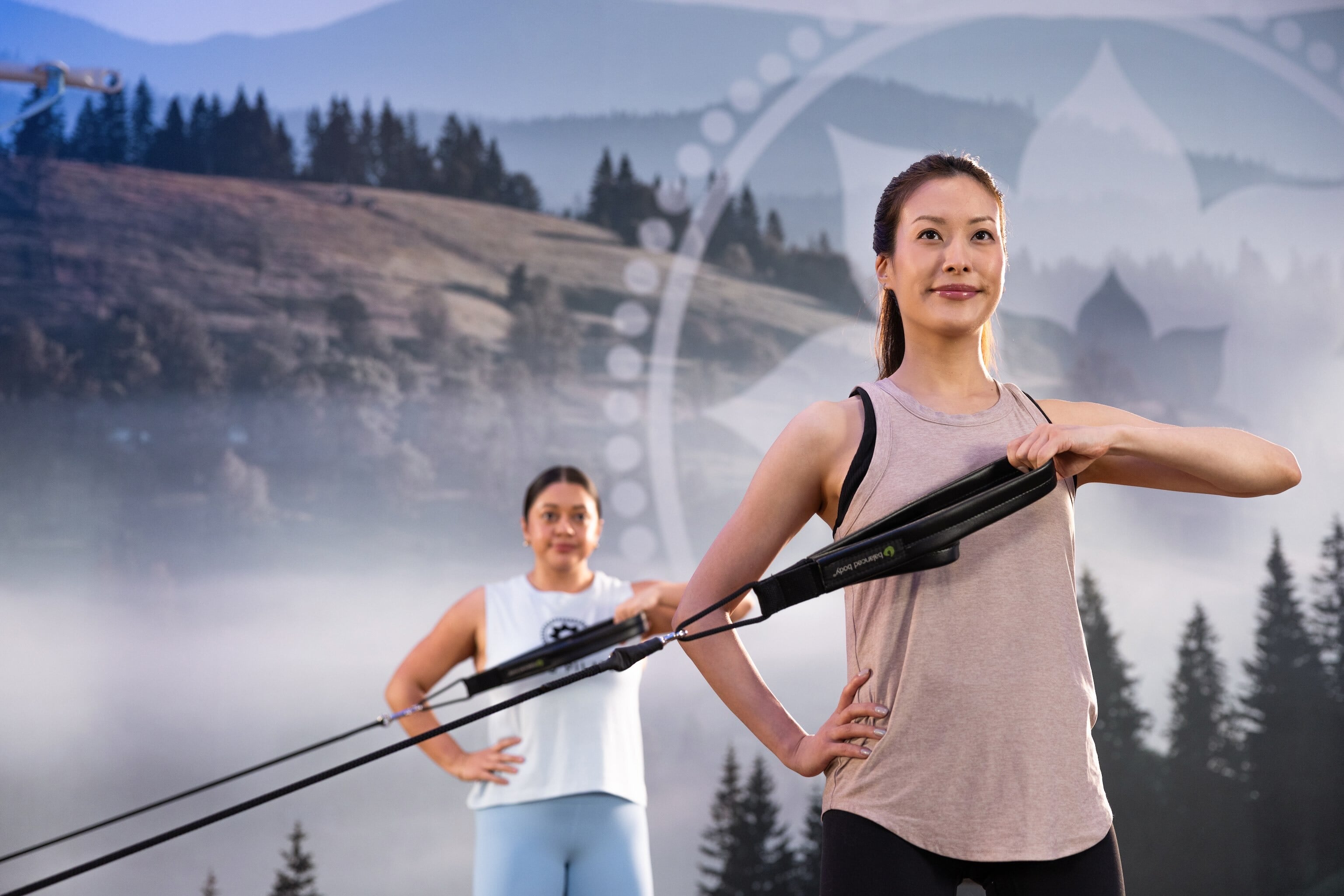
Our studios also use equipment such as the TRX®, Springboard, Chair, Jumpboard, Cadillac and Pilates ball. Each apparatus or prop adds a different type of challenge, so your workouts can keep building as your strength grows. Your instructor will help you adjust the springs and positions so each movement fits your body and your level.
Which Should You Choose?
The right answer depends on what you want from your workouts, and there is no single right way to build muscle.
- New to exercise: Pilates is a welcoming place to start. It can help you build strength, body awareness and confidence together.
- Returning after a break or injury: Low impact, supported movement can make it easier to ease back in. Check with your healthcare provider first if you have concerns.
- Already lifting weights: Pilates can complement your routine with core strength, stability, body control, and improving range of motion.
- Wanting a well-rounded routine: Combine both. Each one challenges your muscles in its own way.
As one trainer quoted in the Boston University article put it, "fitness is fitness. Movement is movement." The best routine is the one you enjoy enough to keep doing.
Ready to feel the difference?
Curious how Reformer Pilates feels in your own body? Find a Club Pilates studio near you and try a class. Our instructors will meet you where you are and help you build strength at your own pace.
Frequently asked questions
Does Pilates build muscle or just tone existing muscle?
Pilates challenges your muscles with resistance, so it builds muscle strength and endurance. "Toning" is a popular word, but what you are feeling is muscles that are working harder and working better together.
Is Pilates good for strength training?
Yes, it counts as resistance training because the springs and your body weight make your muscles work. It is especially impactful for your core, hips and legs.
How will I know it is working?
Muscle building looks and feels different for everyone. Some people notice they carry groceries or climb stairs with more ease. Others notice better stability, endurance or control in a movement. Talk with your instructor about your goals so you can recognize your own progress.
Can I do Pilates and lift weights in the same week?
Many people do. Ask your instructor how to balance your schedule so you can recover well between sessions.
Can I keep progressing on the Reformer?
Yes. Your instructor can adjust the springs, tempo and positioning of your body as you get stronger, so the challenge grows with you. Varying spring settings can add resistance (or in some cases, take away resistance, which can be what adds more challenge), and slower, more controlled movements keep your muscles guessing and progressing.
Related Articles: Everybody Who Wants to Get Stronger Needs Pilates, Can Pilates Help You Lose Weight
- Tagged:
- reformer pilates
- Equipment guide