

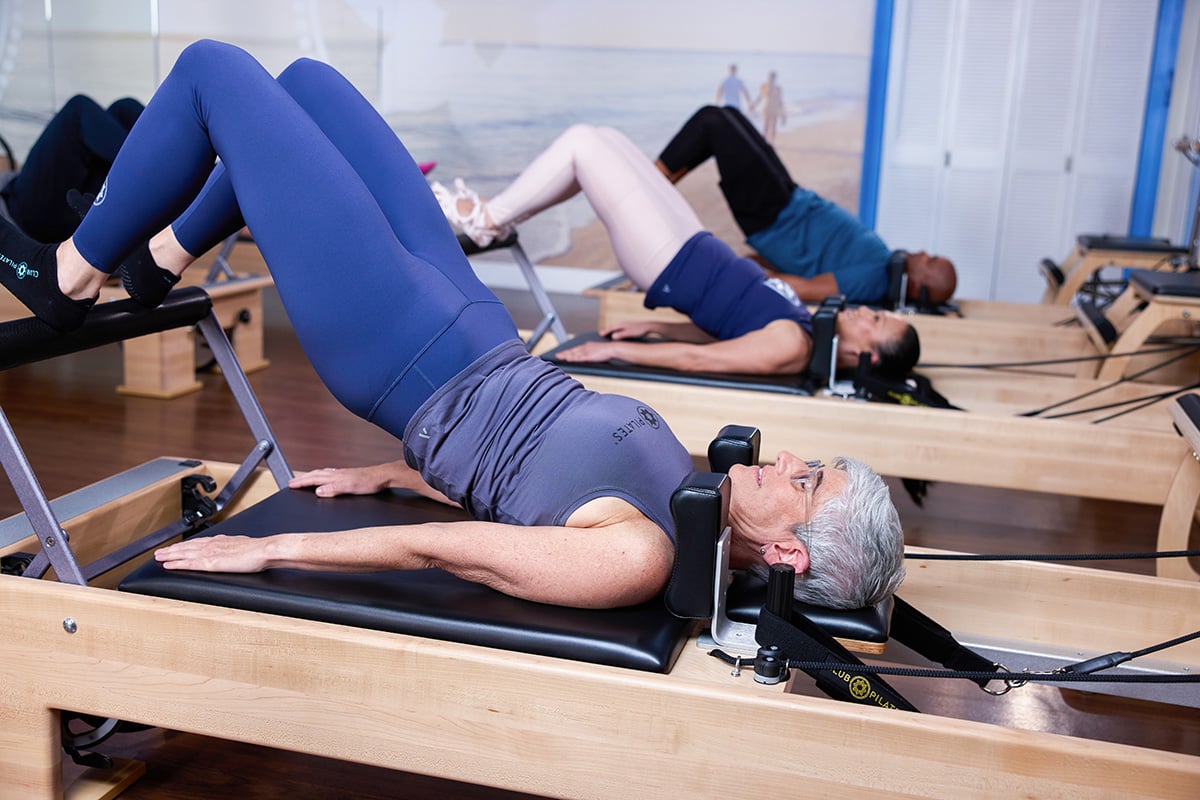
Low back pain is one of the most common complaints we hear from people who are new to Pilates. The good news is that Pilates offers a low-impact way to build the core and hip strength that supports your back. This guide shares safe, beginner-friendly exercises you can try, along with a few tips for practicing with confidence.
Why Low Back Pain Is So Common
Many of us spend long hours sitting at a desk, in a car, or on a couch. Over time, this can lead to weak abdominal muscles and tight hamstrings, and both of these can add extra strain to the low back.
When the core isn't doing its share of the work, the low back muscles often pick up the slack. Tight hamstrings can also pull on the pelvis and change its position, which puts more pressure on the spine. This doesn't mean pain is inevitable for everyone with a desk job, but it helps explain why low back discomfort is so widespread.
Safety Tips
Pilates can be a gentle, supportive way to move, but every back is different. These steps can help you practice safely as you get started.
- Check with your doctor or a physical therapist before beginning, especially if your pain is severe, new, or radiates down your leg.
- Start with a small range of motion and build up slowly as your body adjusts.
- Stop any exercise right away if your pain increases, and rest.
- Practice on a padded mat or Reformer to cushion your spine.
- Move slowly and with control rather than quickly or with momentum.
- Tell your instructor about your back history so they can offer the right cues and modifications.
Pilates Exercises for Low Back Pain
The exercises below are commonly used to support the low back. Unless noted otherwise, try to keep your pelvis in a neutral position and stay within a comfortable range of motion.
Constructive Rest
Why it helps: This resting position allows your spine to settle into a neutral, supported alignment, which may help ease tension in the low back muscles.
How to do it: Lie on your back with your knees bent and feet flat on the floor, hip-width apart. Rest your arms at your sides or on your belly. Breathe quietly here for a few minutes and let your low back soften toward the floor.
Modify if needed: Place a small pillow under your head or knees for extra support.
Windshield Wiper Twist
Why it helps: This gentle rotation can help release tension through the hips and low back while keeping the movement controlled.
How to do it: Lie on your back with knees bent, feet flat, and situated as wide as your mat. Without changing the distance of your feet, slowly lower both knees to one side, then bring them back to center and lower them to the other side. Your hips and low back may peel off the ground as you move; that’s okay. Move slowly and only as far as feels comfortable.
Modify if needed: Keep the range small.
Knee to Chest
Why it helps: This stretch can help release tightness in the low back and glutes.
How to do it: Lie on your back with knees bent. Draw one knee toward your chest, holding behind the thigh or on top of the shin, while you extend the other leg straight on the floor. Hold for a few breaths, then switch sides.
Modify if needed: If both knees to chest feels better for your back, try that instead, keeping the movement slow and gentle.
Hamstring Stretch
Why it helps: Tight hamstrings can pull on the pelvis and change its position, which may add pressure to the low back. Stretching them can help support better alignment.
How to do it: Lie on your back and loop a strap, towel, or stretching band around the arch of one foot. Keep the other leg down with the knee bent or straight. Gently draw the strapped leg toward the ceiling until you feel a mild stretch in the back of the thigh. Hold for several breaths, then switch legs.
Modify if needed: Keep the resting leg bent for more low back support.
Bridge
Why it helps: Bridges activate the glutes and hamstrings, which can help take some of the load off the low back and support better pelvic alignment.
How to do it: Lie on your back with knees bent and feet flat, hip-width apart. Keeping your abdominals gently engaged, press into your feet and lift your hips toward the ceiling, forming a straight line from knees to shoulders.
Modify if needed: Lift only a small amount, keeping the pelvis still rather than rolling through the spine.
Prone Press
Why it helps: This gentle backbend can help extend the spine, which some people find relieving for low back discomfort.
How to do it: Lie face down with your hands on the floor, elbows bent and slightly wider than your shoulders. Press into your hands and lift your chest, coming up onto your forearms while keeping your pelvis heavy on the mat.
Modify if needed: Stay low, lifting only your head and chest slightly, and avoid pressing up further if you feel any pinching.
Basic Ab Curl
Why it helps: Mild abdominal work can help strengthen the core, which supports the spine and may take some pressure off the low back.
How to do it: Lie on your back with knees bent, feet flat, and hands behind your head. Keeping your pelvis neutral, lift your head and shoulders slightly off the mat, taking care to not overly tuck your chin to your chest, then lower back down with control.
Modify if needed: Keep your head down and simply practice drawing your abdominals in toward your spine without lifting.
Exercises to Avoid or Modify
Which movements to approach with care depends on what is causing your pain, so it helps to know your own body and listen to it closely. In general, be thoughtful with end range flexion or extension, rolling movements, deep twisting, full sit-ups, and fast or heavy loading.
If any of these are part of your routine, consider modifying with bent knees, a smaller range of motion, or keeping your head down during abdominal work. When in doubt, choose the gentler version and build up gradually.
Breathing for a Supported Back
Your breath plays a quiet but important role in supporting your spine. Inhale through your nose, then exhale slowly through a relaxed mouth, allowing your deep core muscles to gently engage as you breathe out. This simple pattern can help you stay connected to your core throughout each exercise.
How Club Pilates Classes Support Your Back
In a Club Pilates class, the Reformer's springs can provide support and gentle resistance, helping you move through exercises with more control. Instructors offer cues and modifications so you can adjust movements to fit your body and your back history. If you are new to Pilates, starting with a beginner-friendly class is a great way to build a strong foundation. Visit clubpilates.com to find the right class for you.
Try a Free Intro Class
Try a free intro class at a Club Pilates studio near you to start easing back issues with guided, supportive instruction.
Frequently Asked Questions
What are the best Pilates exercises for lower back pain?
Gentle, controlled moves like Constructive Rest, Bridge, Knee to Chest, and Hamstring Stretch are good starting points. These exercises can help support the low back without putting it in strained positions. Always start with a small range of motion and stop if pain increases.
Which Pilates exercises should I avoid with lower back pain?
Approach end range flexion or extension, rolling, deep twisting, full sit-ups, and fast or heavy loading with caution. Depending on what is causing your pain, these movements may need to be modified or skipped. A smaller range of motion or bent knees can make many exercises more comfortable.
How often should I do Pilates exercises for back pain?
Many instructors suggest practicing two to three sessions a week. Consistency and control matter more than intensity, so steady, mindful practice over time tends to serve the low back better than occasional, harder sessions.
Author Note and Disclaimer
Written by Club Pilates Master Trainer Cara Bonney. Please check with a medical professional before starting any new exercise program, especially if you have existing back pain.
Recent Articles: How Often Should You Do Pilates?, How to Become a Pilates Instructor, What’s the Difference Between Pilates and Barre?
- Tagged:
- injury recovery